Water removal
Pumping and extraction come first. EPA flood cleanup guidance says standing water should be removed as quickly as possible to protect health and limit structural damage (EPA via HUD).
706 · 762 · Georgia
Water damage cleanup, flood restoration and water removal for homeowners in 141 towns from Dalton and Blue Ridge to Athens, Augusta and Columbus. One call connects you with an independent water damage restoration company for pumping out standing water, drying floors and walls, and crawl space and basement flood cleanup.
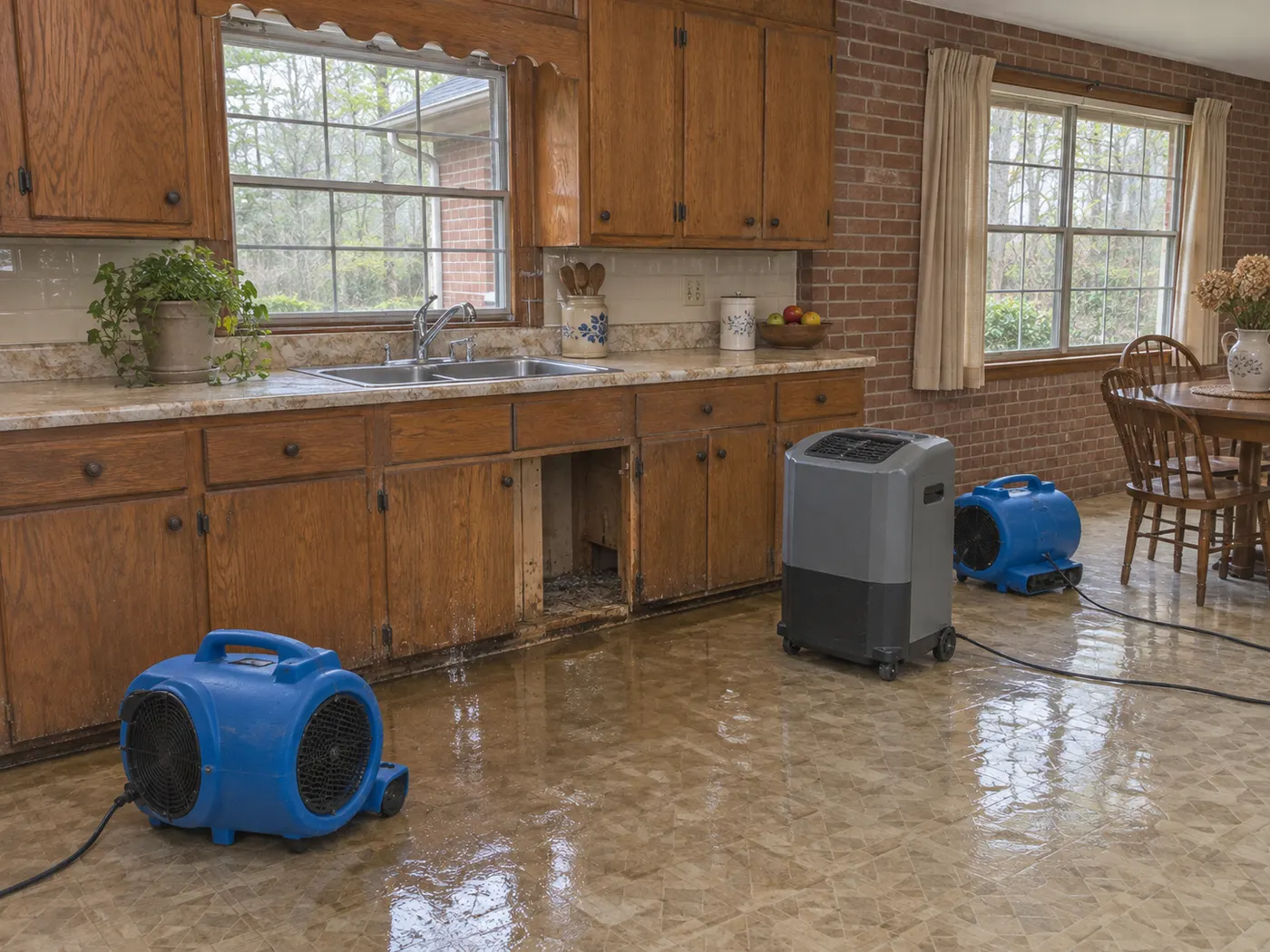
A split supply line, a sewer that backs up, a washer or water heater that lets go, a toilet that will not stop running over: any of them can leave wet flooring, drywall and cabinets behind. Call the number on this page and you are connected with an independent restoration company that works in your part of Georgia. That company explains how it removes the water and dries the house, and it sets its own pricing and schedule. The line is for homeowners.
Water damage, start to finish
From a crawl space in Rome to a split-level in Evans, the job tends to follow the same path: get the water out, dry the structure, then rebuild what could not be saved. Here is what each part involves and what the federal guidance says about it.
Pumping and extraction come first. EPA flood cleanup guidance says standing water should be removed as quickly as possible to protect health and limit structural damage (EPA via HUD).
Air movers, air conditioning and dehumidifiers do the drying (CDC). EPA guidance is to keep indoor humidity below 60 percent, and ideally between 30 and 50 percent (EPA).
Drywall and insulation touched by floodwater should come out, along with mattresses, carpet and other items that soak up water and cannot be disinfected (FEMA).
Rebuilding comes last, once materials are clean and dry. You may need a building permit before that work starts, so check with your city or county office (FEMA).
Moisture is why speed matters. EPA guidance is to get wet areas and belongings dry within 24 to 48 hours (EPA), and anything that cannot be cleaned and dried in that time is usually discarded (EPA via HUD).
Even when the water is gone quickly, a house that took on floodwater can take several weeks to dry out completely (EPA via HUD).
Under the IICRC S500 standard, restorers grade water by contamination. That grade decides how much gets removed and what protection the crew uses.
For gray and black water, the standard calls for cleanup before drying, with contamination controls and worker protection (IICRC).
It is the step where standing water is pumped or vacuumed out of floors, carpet and crawl spaces before drying equipment goes in. Removing standing water quickly limits structural damage (EPA via HUD).
Take photos and video of everything first, inside and outside, and label them by room before you move anything. After declared disasters, FEMA has said residents do not need to wait for an inspection to begin cleanup (FEMA).
FEMA recommends long sleeves, long pants, rubber or plastic gloves and waterproof boots or shoes (FEMA), and adds goggles and masks when handling debris (FEMA).
Children should not take part in disaster cleanup. People with asthma, other lung conditions or a weakened immune system should not enter buildings with indoor water leaks (FEMA).
The EPA says water damage caused by sewage or other contaminated water calls for a professional with experience cleaning buildings damaged by contaminated water (EPA).
Water keeps moving into subfloor, cabinets and insulation until the source is stopped. These three steps limit the spread while you line up help.
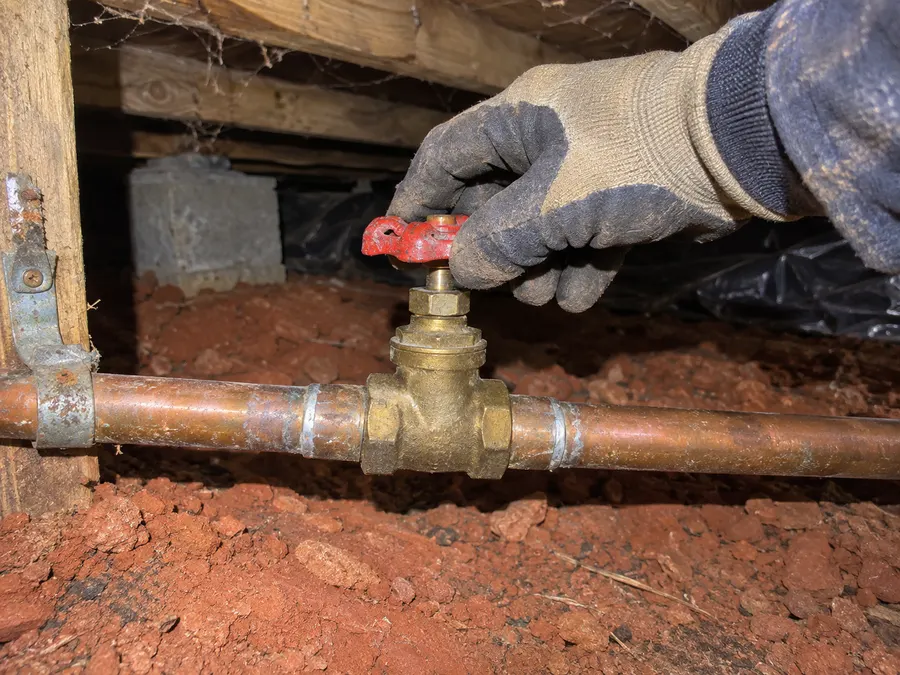
Turn the main shut-off, usually where the line enters the house, in a crawl space or near the water heater. On a private well, switch off the pump breaker too.
If water is near outlets, cords or the panel, turn those circuits off at the breaker before you walk in. If you cannot reach the panel without standing in water, stay out.
Take photos and video of every wet room before moving anything. Then call to be connected with a restoration company that serves your town.
Open a region, then pick your town. Every page lists its own sources.
Last updated